
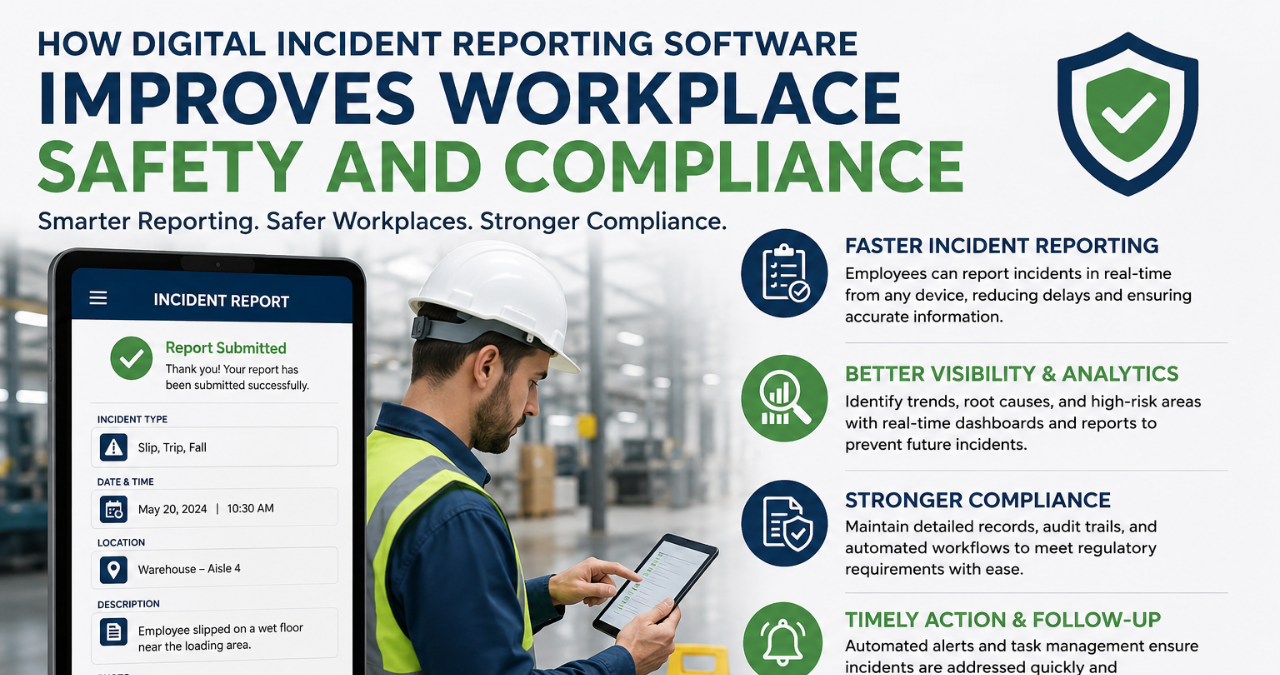
Paper forms lose incidents. People forget. Pages get wet and torn. That is why workplaces now use digital incident reporting software. It logs the moment something goes wrong, with no delay and no missing details. Australia recorded 146,700 serious workers compensation claims in 2023-24, up 5.5 percent from the year before. That is over 400 claims every single day, and most trace back to slow or sloppy reporting. Digital tools fix that gap fast. This article breaks down how that happens and why it matters for compliance.
Why Do Paper Reports Fail So Often?
Paper gets lost. A worker fills a form, drops it on a desk, and three people forget to pass it along. Weeks pass.
Handwriting adds more risk. Someone reads ‘12’ as ‘17’. A date smudges. A name gets skipped, and that small slip turns into a legal headache later.
Body stressing and falls make up 56.3 percent of all serious claims in Australia. These need fast follow up, not a folder sitting in a drawer.
How Does Software Catch Problems Before They Repeat?
Good software spots patterns. If three workers report sore backs from the same task in one month, the system flags it. A manager sees that on a dashboard, not buried across paper files.
Patterns matter because body stressing alone accounts for 34.5 percent of serious claims nationwide, the single biggest injury mechanism in the country. Software tracking that trend lets a business step in before claim number four.
Real time alerts push straight to supervisors. No more waiting for someone to walk a report across the building.
What Makes Digital Records Better for Compliance?
Regulators want timestamps, names, locations, and outcomes. A digital system stores all four automatically, every time. Nothing gets left out by accident.
Audits move faster too. Instead of digging through filing cabinets, a compliance officer pulls six months of records in under a minute during a WHS inspection.
Mental health claims now make up 12 percent of serious claims, with a median time lost of 35.7 weeks, nearly five times the average. Digital systems tag these cases early and route them to support without delay.
Does Speed of Reporting Actually Reduce Risk?
Yes, and the data backs it firmly. Faster reporting means faster fixes. A spill gets cleaned. A loose rail gets bolted down before someone trips on it.
Construction, healthcare, and manufacturing account for over 40 percent of Australia’s serious claims combined. These fast moving industries cannot afford a two week reporting delay. Software cuts that delay to minutes.
Workers trust a system more when they see action happen fast. That trust pushes people to report small issues before they grow into serious ones.
Why Should Every Business Switch Now?
The cost of doing nothing keeps climbing. Serious claims have risen 34.5 percent over the past decade. Paper systems were never built for that kind of pressure.
Digital software gives every business a clear picture of its own risk, updated daily instead of quarterly. That clarity only grows stronger the longer a business uses it.