
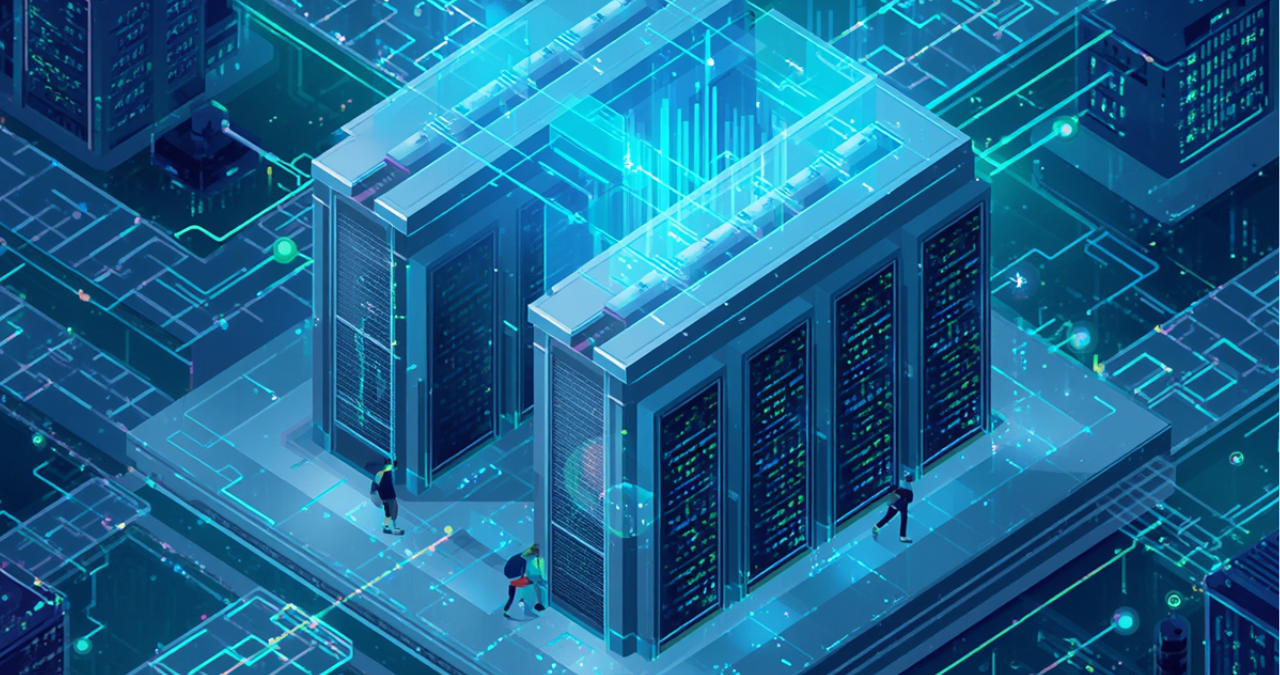
Digital demand is not slowing down. AI training workloads, cloud computing, and streaming services are pushing infrastructure harder than ever before. A single GPT-4 training run consumed an estimated 1,287 MWh of energy, according to research from the University of Washington. The gap between what old data centres can handle and what new workloads need is widening fast. That is why advanced data centre development has become the most important build conversation in the technology sector right now.
Why Are Traditional Data Centre Designs Struggling to Keep Up?
Legacy facilities were built for average rack densities of 5 to 10kW per rack. AI computing infrastructure regularly exceeds 40kW per rack. Some GPU clusters push past 100kW. Traditional air cooling cannot handle that heat load without massive floor space and energy waste. The physics simply do not work at that density.
Power delivery is the other wall. Older facilities running at 10MW total capacity are not candidates for AI workload hosting. The transformer infrastructure, busbar sizing, and backup generation all need to be sized for the peak loads these workloads create. Retrofitting is possible, but it rarely makes economic sense past a certain point.
What Role Does Liquid Cooling Play in Next-Generation Builds?
Liquid cooling is not a trend. It is the answer to a physics problem. Direct liquid cooling delivers coolant directly to processors. Immersion cooling submerges entire servers in dielectric fluid. Both methods remove heat far more efficiently than air. Immersion cooling can achieve PUE values as low as 1.03, compared to the industry average of 1.58 for air-cooled facilities.
The business case is straightforward. Lower PUE means lower energy costs. At scale, the difference between a PUE of 1.58 and 1.1 can represent millions of dollars annually in electricity bills. Hyperscalers like Google and Meta have been investing in liquid cooling infrastructure for years. The rest of the market is following because the economics demand it.
How Is Renewable Energy Changing Development Decisions?
Power Purchase Agreements, or PPAs, are now standard in large data centre development. A PPA locks in a fixed price for renewable energy from a specific source over a long term, typically 10 to 15 years. Microsoft committed to being carbon negative by 2030 and has signed PPAs covering multiple gigawatts of renewable capacity globally.
Co-location of data centres with renewable energy sources is becoming more common. Building near wind farms or solar installations reduces transmission losses and strengthens the green energy narrative for enterprise customers who have their own sustainability commitments to meet. Location decisions are no longer just about fiber and power. Carbon intensity of the local grid now factors into the business case.
What Does AI Infrastructure Mean for Physical Design?
AI clusters need more than just power and cooling. They need low-latency interconnects between servers. InfiniBand and high-speed Ethernet fabrics require dense cabling infrastructure. Cable management that works at 40 rows of servers looks completely different from standard enterprise deployment. Raised floors are often inadequate for the cable volumes involved.
Physical security design also changes for AI facilities. These are high-value assets. Multi-factor biometric access, man-trap entries, and 24/7 on-site security are baseline. Some hyperscale operators run facilities with zero public information about their location. The physical security posture of an AI-focused facility matches the sensitivity of what runs inside it.
What Does the Future of Data Centre Development Actually Look Like?
Modular construction is accelerating. Pre-fabricated data hall modules can be built off-site and deployed in weeks rather than months. This reduces construction risk, improves quality control, and gives operators the ability to scale incrementally rather than committing to full capacity upfront.
Edge computing is pushing development out of central campuses and into smaller, distributed sites. A 1MW edge facility 20 miles from a city center serves latency-sensitive applications that a hyperscale campus 500 miles away cannot. Advanced development is not just about building bigger. It is about building smarter, closer, and faster than the demand curve requires.
Stay in touch to get more updates & news on Us Daily Hub!