
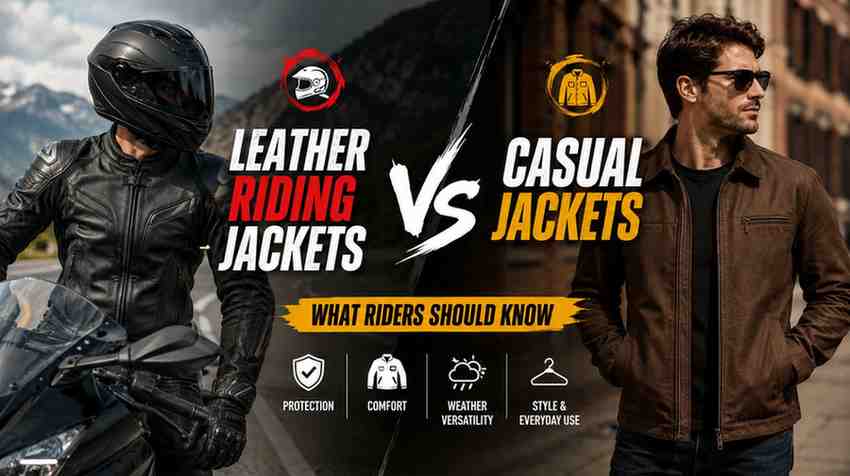
A jacket is one of the most important pieces of clothing a rider can choose before getting on a motorcycle. At first, some new riders may think any sturdy-looking jacket can work for a ride. A casual leather jacket, denim jacket, hoodie, or fashion outerwear may seem good enough for short trips around town. But once a rider spends real time on the road, the difference between a riding-focused jacket and a casual jacket becomes much clearer.
Motorcycle riding creates conditions that everyday clothing is not always designed to handle. Wind, temperature changes, body position, road dust, long hours, and repeated movement all affect how a jacket feels and performs. A jacket that looks stylish while standing may feel uncomfortable, loose, restrictive, or impractical once the rider is seated on the bike.
This is why riders should understand the difference between leather riding jackets and casual jackets. Both can have style, but they are not always built for the same purpose. A riding jacket is usually selected for comfort, durability, fit, storage, layering, and road use. A casual jacket is usually made for everyday wear and appearance. For motorcycle riders, that difference matters.
Why the Jacket Choice Matters
Motorcycle apparel has to work in motion. Riders are not simply walking, sitting, or standing. They are exposed to wind, speed, changing temperatures, and a fixed riding posture. The arms reach forward, the shoulders move, the back may stretch, and the waist area can bunch if the jacket is not cut properly.
A casual jacket may feel comfortable when worn normally, but it may not be designed for this riding position. Sleeves may ride up when the rider reaches for the handlebars. The back may feel tight. The front may bunch around the waist. Pockets may sit in awkward places. The jacket may flap in the wind or fail to provide the comfort expected during longer rides.
A riding-focused jacket is usually chosen with these conditions in mind. It should feel good while seated on the motorcycle, not just while standing. It should allow arm movement, reduce wind discomfort, and support practical use during rides and stops.
For riders who spend more than a few minutes on the road, the jacket can strongly affect comfort and confidence.
The Purpose of a Leather Riding Jacket
A leather riding jacket is designed around motorcycle use. Riders choose it because it can provide a durable outer layer, classic motorcycle style, wind resistance, and useful features for road conditions. It is not just a fashion piece. It is part of the rider’s gear setup.
A leather motorcycle jacket can support riders who want apparel that feels natural on the road while still looking right off the bike. It can work during cool weather, highway rides, weekend trips, and motorcycle events. It can also be layered over shirts, flannels, hoodies, or thermal layers depending on the season.
Leather riding jackets remain popular because they combine practical use with timeless biker style. They fit well with jeans, boots, gloves, vests, and helmets. They also develop character over time when cared for properly. For many riders, a good jacket becomes one of the most dependable pieces in their wardrobe.
The main purpose is simple: help the rider stay comfortable, covered, and road-ready during real motorcycle use.
What Casual Jackets Are Usually Built For
Casual jackets are usually designed for everyday activities. They may be made for style, warmth, light weather, or general comfort. A casual leather jacket may look similar to a riding jacket at first glance, but the design priorities are often different.
A fashion leather jacket may focus on a slim fit, decorative details, lightweight feel, or streetwear appearance. A denim jacket may look rugged but may not provide the same wind resistance or structure. A hoodie may feel comfortable but can become unstable in wind. A regular bomber or casual outerwear jacket may be warm but not cut for motorcycle posture.
This does not mean casual jackets are useless. They may work well for everyday wear, walking around, or casual settings. But riders should understand their limits. A jacket built mainly for appearance may not offer the same comfort or practicality during a ride.
The problem is not always obvious during short rides. But during longer trips, highway speeds, cooler weather, or frequent riding, those differences become easier to feel.
Fit in the Riding Position
Fit is one of the biggest differences between riding jackets and casual jackets. A motorcycle jacket should be judged in the riding position. Riders should sit, reach forward, and check how the jacket moves across the shoulders, chest, arms, and waist.
Casual jackets are often fitted for standing or walking. When the arms reach forward, sleeves may become too short. The back may pull. The shoulders may feel tight. The jacket may shift upward or bunch around the stomach. These issues can become uncomfortable on longer rides.
A riding jacket should allow more natural movement. Sleeves should provide enough length when the arms are extended. The shoulders should not feel restricted. The body should fit securely without feeling too tight over layers. The jacket should sit properly when the rider is seated.
This is especially important for cruiser riders and touring riders who may spend hours in one position. A poor fit can cause fatigue and distraction. A good fit helps the rider stay relaxed.
Wind Resistance and Road Comfort
Wind is one of the biggest factors in motorcycle comfort. At speed, wind can make a ride feel much colder and can cause loose clothing to flap. A casual jacket may not handle wind well, especially if it has a loose cut, weak closures, or lightweight material.
Leather riding jackets are often chosen because leather can help block wind effectively. A well-fitting jacket reduces direct wind exposure across the chest and arms. Secure zippers, cuffs, and collars also help keep air from entering uncomfortable areas.
A casual jacket may not have closures designed for riding. Sleeves may allow air in. The front may open slightly. The collar may flap. The jacket may lift at the waist. These small issues can become distracting, especially during highway riding.
Road comfort comes from how all these details work together. Material, fit, closures, lining, and cut all affect how the jacket behaves in wind. Riders should choose outerwear that feels stable at speed, not only stylish at rest.
Material Quality and Durability
Leather riding jackets are often valued for durability. Riders want outerwear that can handle regular use, wind, sun, road dust, and changing weather. Leather can last for years when properly cared for, and many riders appreciate the way it softens and develops character over time.
Casual jackets vary widely in material quality. Some may be made from thinner leather, synthetic materials, fashion fabrics, or lightweight construction. They may look good but not be intended for repeated motorcycle use. Stitching, lining, zippers, and seams may not be built with riding stress in mind.
Durability is not only about the outer material. A riding jacket should have strong seams, reliable zippers, secure pockets, and comfortable lining. Stress points like shoulders, sleeves, and pocket areas should feel well constructed.
For riders who wear their gear often, durability matters. A jacket that wears out quickly or loses shape after repeated rides can become disappointing. A better-built jacket usually provides stronger long-term value.
Storage and Pocket Design
Riders often need to carry small essentials. Phone, wallet, keys, sunglasses, earplugs, cash, cards, registration papers, and other items all need secure places. Jacket pockets can make this easier, but pocket design matters.
A riding jacket should have pockets that are useful while riding and during stops. Inside pockets can protect valuables. Outside pockets can provide quick access. Zippered or snapped closures can keep items secure.
Casual jackets may have pockets designed more for appearance than riding convenience. They may be shallow, poorly placed, or uncomfortable when filled. A pocket that sits in the wrong area can press against the body while seated on the motorcycle.
Riders should think about what they carry and how often they need access to it. Practical storage can make a big difference during fuel stops, restaurant stops, bike nights, and weekend rides.
Layering for Different Seasons
Motorcycle riders often deal with changing weather. A jacket should work with realistic layers. In cooler weather, riders may wear a T-shirt, flannel, hoodie, or thermal layer underneath. In mild weather, they may wear something lighter.
A riding jacket should provide enough room for layering without being too loose. If the jacket is too slim, it may feel uncomfortable over a hoodie. If it is too large, it may flap in the wind. The right balance depends on the rider’s climate and habits.
Casual jackets may not always layer well for riding. A fashion jacket may be cut too narrow. A casual coat may be too bulky. A hoodie under a loose jacket may create too much movement in the wind.
Good layering helps riders stay comfortable across different parts of the day. A ride may start cool, warm up later, and become chilly again in the evening. A jacket that works with layers gives the rider more flexibility.
Motorcycle Jackets for Men and Everyday Use
Modern riders often want gear that works both on and off the bike. They do not want to change clothes every time they stop at a diner, bike night, garage, or local event. This is one reason motorcycle jackets for men remain popular with riders who value both road comfort and classic style.
A good riding jacket can look natural after the motorcycle is parked. It fits the culture of bike nights, rallies, weekend meetups, and casual stops. It can also work with jeans, boots, gloves, and other everyday riding apparel.
Casual jackets may look fine off the bike, but they may not perform as well during the ride. The advantage of a well-chosen motorcycle jacket is that it can support both parts of the experience: riding and everything around the ride.
For many American riders, motorcycle apparel is part of personal identity. A jacket should feel useful, but it should also feel like something the rider enjoys wearing.
Road Style vs Fashion Style
There is a difference between road style and fashion style. Fashion style may focus on trends, slim cuts, decorative details, or visual appeal. Road style has to include function. It needs to look good, but it also needs to work while riding.
Leather riding jackets often succeed because they combine both. They carry a timeless look while still offering practical value. They can be rugged, clean, classic, or bold depending on the design. More importantly, they feel connected to actual motorcycle culture.
Casual jackets may imitate the look of motorcycle apparel without offering the same usefulness. Riders should be careful not to choose a jacket only because it resembles biker gear. The details matter: fit, closures, material, pockets, comfort, and wind behavior.
Real road style comes from gear that serves the rider. When a jacket works well, it naturally looks more authentic.
When a Casual Jacket Might Be Enough
There may be situations where a casual jacket feels acceptable, such as very short low-speed rides in mild weather or casual wear after the bike is parked. Some riders may use casual outerwear for quick local trips depending on comfort and personal preference.
However, riders should understand that casual jackets are not designed for all riding situations. They may not perform well in wind, cold, longer rides, or highway conditions. They may also lack the durability and riding-specific comfort serious riders need.
The key is honesty about the ride. If someone is riding frequently, covering longer distances, or spending time at highway speed, a riding-focused jacket is usually a smarter choice. If the ride is more demanding, the apparel should match.
Riders should choose gear based on conditions, not convenience alone.
How to Evaluate a Jacket Before Riding
Before using any jacket on a motorcycle, riders should evaluate it carefully. First, check the fit while seated in a riding posture. Reach forward and see whether the sleeves stay in place. Move the shoulders and check for restriction. Close the jacket and make sure it does not pull uncomfortably across the chest or waist.
Next, check the closures. Zippers should feel strong. Snaps should stay secure. Cuffs should not let in too much wind. Pockets should close properly and hold essentials without feeling awkward.
Then consider layering. Can the jacket fit over the clothing normally worn during rides? Does it feel too tight over a hoodie? Does it flap when worn over a light shirt?
Finally, think about real use. Will this jacket feel comfortable for an hour or more? Will it work during stops? Does it match the weather and route?
These questions help riders avoid choosing a jacket based only on appearance.
Why Riders Often Invest in Riding Jackets
Riders often invest in proper riding jackets because they learn the value through experience. A good jacket becomes dependable. It works in cooler weather, handles wind better, provides useful storage, and fits the rider’s motorcycle lifestyle.
A casual jacket may be cheaper or easier to grab from the closet, but it may not offer the same comfort or durability. Over time, riders usually prefer gear that performs consistently. A riding jacket can become part of the regular routine.
The investment is also about long-term value. A well-made leather riding jacket can last for years with proper care. It can become more comfortable as it breaks in and more personal as it develops character.
For serious riders, that combination of usefulness and longevity makes a motorcycle jacket worth considering.
Caring for Leather Riding Jackets
Leather riding jackets need proper care to stay in good condition. Riders should keep the jacket clean, wipe away dust and road grime, and condition the leather when needed. Leather should be stored in a dry place and allowed to air out after rides.
If a jacket gets wet, it should be dried naturally away from strong direct heat. Excessive heat can dry out leather. Proper care helps maintain flexibility and appearance.
Zippers, snaps, and lining should also be checked over time. Small issues can often be fixed before they become bigger problems. Riders who care for their jackets can often use them for many seasons.
A casual jacket may not always be built for the same long-term road use, but any leather garment benefits from proper maintenance.
Final Thoughts
Leather riding jackets and casual jackets may look similar at first, but riders should understand the differences before choosing what to wear on the road. Riding jackets are selected for motorcycle posture, wind comfort, durability, storage, layering, and long-term use. Casual jackets are usually designed for everyday wear and may not perform the same way during real rides.
For American motorcycle riders, a good jacket should support both road function and personal style. It should feel comfortable while seated on the bike, handle changing weather, provide practical storage, and still look natural during stops and events.
Casual jackets may work for ordinary wear, but serious riders often benefit from apparel designed with riding in mind. When the jacket fits the ride, the rider can focus less on discomfort and more on enjoying the road.