
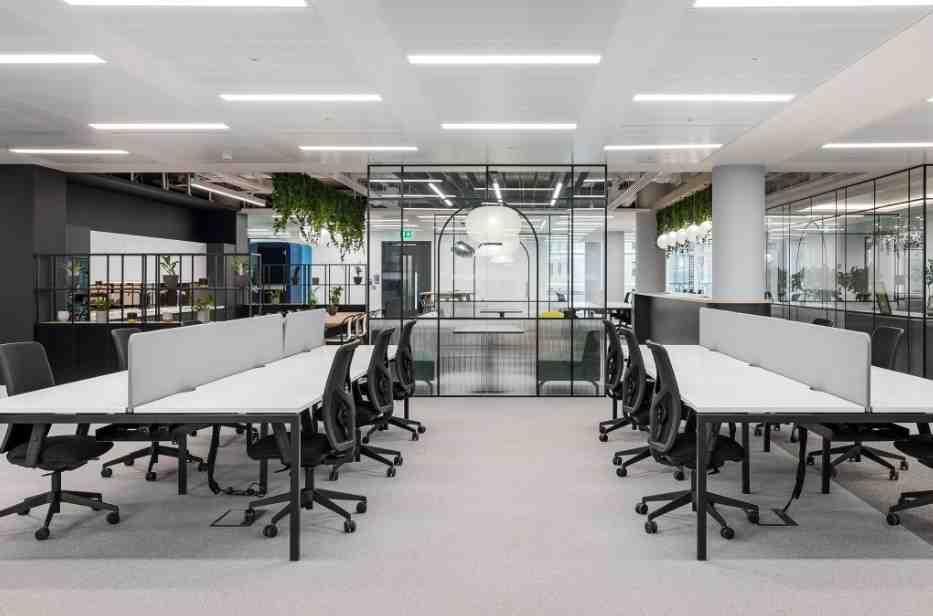
Upgrading to energy-efficient commercial lighting reduces operational costs and lowers a facility’s carbon footprint. By implementing modern LED fixtures and smart building controls, organizations can improve workplace productivity, enhance customer experiences, and secure a strong return on investment.
Most business owners look at their ceilings and simply see fixtures. However, the illumination in a commercial space represents a massive portion of its daily energy use. A transition to modern lighting solutions can fundamentally alter how a facility operates. Energy-efficient commercial lighting involves utilizing advanced technology to provide optimal brightness while consuming a fraction of the electricity used by traditional bulbs. By making this transition, modern lighting solutions can transform standard buildings into smarter, more sustainable businesses.
Understanding the “Why”: Benefits Beyond Cost Savings
While lowering the monthly utility bill is a primary motivator, the advantages of upgrading your illumination extend far beyond simple financial metrics.
Environmental impact: Reducing carbon footprint
Lower electricity consumption directly translates to fewer greenhouse gas emissions. Implementing energy-efficient commercial lighting reduces a company’s environmental impact, helping businesses meet sustainability goals and appeal to eco-conscious consumers.
Enhanced productivity and well-being for employees
Poor lighting causes eye strain, headaches, and fatigue. Modern lighting solutions closely mimic natural daylight, which helps regulate circadian rhythms. This results in employees feeling more focused, alert, and comfortable throughout their shifts.
Improved aesthetics and customer experience
First impressions matter. High-quality illumination highlights product displays in retail environments and creates welcoming atmospheres in hospitality settings. A brightly and accurately lit space makes customers feel safe and eager to engage with your business.
Types of Energy-Efficient Commercial Lighting Technologies
The market offers several powerful tools to help businesses illuminate their spaces strategically.
LED lighting: The undisputed champion
Light Emitting Diodes (LEDs) have revolutionized commercial infrastructure.
- Longevity and durability: An industrial LED fixture can last up to 100,000 hours, drastically reducing maintenance and replacement costs.
- Versatility and design options: LEDs are available in various color temperatures and physical designs, making them suitable for everything from focused surgical lighting to broad warehouse illumination.
Smart lighting systems: The future is now
Taking LEDs a step further, smart lighting introduces programmable control to your facility.
- Sensors, controls, and automation: Occupancy sensors ensure lights automatically turn off in empty conference rooms, while daylight harvesting dimmers adjust artificial brightness based on the natural sun coming through the windows.
- Integration with building management systems: Smart lights connect seamlessly with existing HVAC and security systems, giving facility managers centralized control over their entire energy footprint.
Implementing Energy-Efficient Commercial Lighting: A Practical Guide
Transitioning to new technology requires a clear strategy to ensure seamless integration and maximum efficiency.
Assessing current lighting infrastructure
An upgrade begins with a thorough energy audit. Facility managers must evaluate existing fixtures, measure current wattage usage, and identify spaces that suffer from over-illumination.
Choosing the right solutions for different commercial environments
A corporate office requires different solutions than a high-bay distribution center. Offices benefit from anti-glare panels and personalized dimming controls. Conversely, warehouses require powerful, motion-activated directional lighting that can penetrate high shelving aisles.
The importance of professional installation and maintenance
Advanced electrical systems require precise handling. Improper wiring compromises both safety and efficiency. Sound Effects Arizona teams provides you best solution for installing, integrating, and maintaining these specialized setups, ensuring your investment operates flawlessly from day one.
Overcoming Challenges and Maximizing ROI
Transitioning your infrastructure is a major project, but the financial hurdles are easier to clear than you might think.
Addressing initial investment concerns
The upfront cost of smart sensors and industrial LEDs often causes hesitation. However, viewing this cost as a capital investment rather than an operational expense reveals its true value.
Exploring incentives and rebates
Local governments and utility providers frequently offer generous rebates to organizations that reduce their grid dependency. These financial incentives can offset a significant percentage of the initial hardware and installation costs.
Long-term savings and operational efficiency
Once installed, energy-efficient commercial lighting immediately reduces monthly power consumption. Combined with near-zero maintenance requirements, the system pays for itself rapidly, turning previously wasted energy expenditure into bottom-line profit.
Creating Smarter, More Sustainable Businesses
Embracing energy-efficient commercial lighting is an essential step toward modernizing any facility. By combining high-performance LED fixtures with intelligent automation, businesses dramatically lower their carbon footprint, elevate employee well-being, and reduce overhead costs. Evaluate your current infrastructure and consider stepping into a brighter, more sustainable future for your organization.