
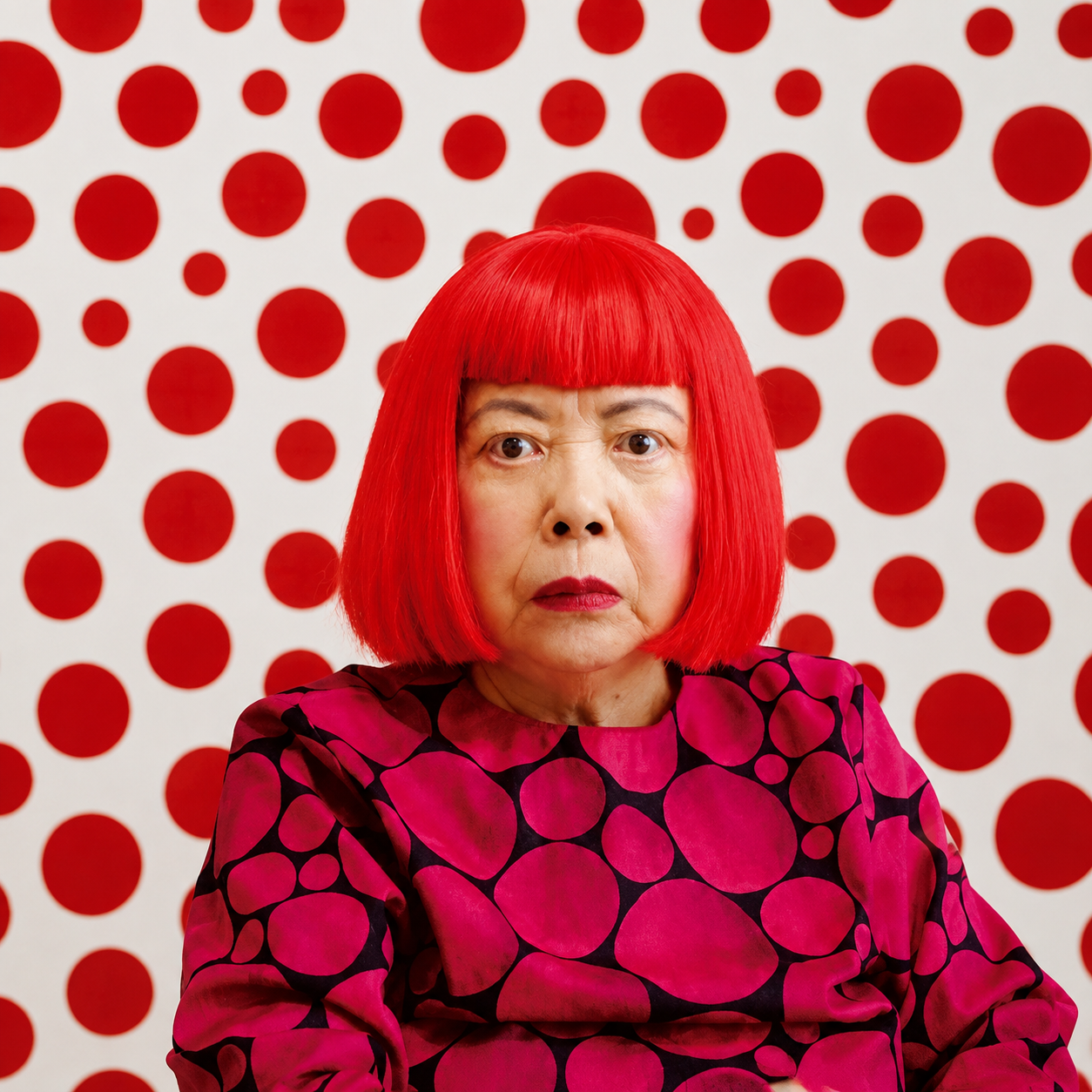
The kusama artist is a phrase that usually refers to Yayoi Kusama, one of the most famous and original artists in the world. Known for her bright colors, repeating dots, pumpkins, mirrors, and immersive rooms, Kusama has created an artistic world that is instantly recognizable. Her work can look playful and simple at first glance, yet it often carries deep ideas about life, nature, identity, fear, and infinity.
Yayoi Kusama has spent many decades building a career that crosses different forms of art. She is a painter, sculptor, writer, fashion designer, installation artist, and performer. Her famous polka dots have appeared on paintings, clothing, objects, buildings, and large art installations. Today, people around the world visit museums and exhibitions to experience her unforgettable creations.
What makes the kusama artist so special is the ability to turn personal ideas into art that millions of people can understand and enjoy. Her work shows that creativity doesn’t always have to follow traditional rules. Sometimes, an unusual idea can become something powerful, meaningful, and beautiful.
This article explores the life, art, ideas, career, and lasting influence of Yayoi Kusama. From her early years in Japan to her famous Infinity Mirror Rooms, there is a great deal to discover about this remarkable creative figure.
Who Is the Kusama Artist?
Yayoi Kusama is a Japanese contemporary artist who is widely known for her distinctive use of dots, repeated patterns, bright colors, and immersive installations. She was born in Matsumoto, Japan, and developed an interest in art at a young age.
Over time, she created a style that was very different from the work of many other artists. Rather than simply painting traditional scenes, she often repeated the same shape or pattern again and again. Dots became one of the strongest symbols in her work.
The kusama artist has worked in many different artistic fields. Her career has included:
- Painting
- Sculpture
- Installation art
- Performance art
- Fashion
- Writing
- Drawing
- Collage
- Public art
This wide range of work shows her creative flexibility. She didn’t want to stay inside one artistic box. Instead, she explored new materials and new ways to communicate her ideas.
Her art is now recognized around the world. Major museums have presented exhibitions of her work, while her installations often attract huge audiences. Well, that’s no small achievement for an artist whose ideas were once seen as unusual or difficult to understand.
The Early Life of Yayoi Kusama
Yayoi Kusama grew up in Japan during a period that was very different from the global art world she would later enter. From an early age, she was interested in drawing and creating images.
She studied art and developed her skills while also forming her own ideas about what art could be. Traditional expectations did not always match her ambitions. However, Kusama continued to pursue her creative interests.
Her early experiences played an important role in the development of her artistic style. She began exploring repeated forms, detailed patterns, and visual ideas that seemed to extend beyond the normal limits of a painting.
Later, Kusama decided to take a bold step in her career by moving to the United States. This decision brought her into contact with a fast-changing art scene. It also gave her the chance to develop her own voice as an artist.
Leaving a familiar environment behind wasn’t easy, of course. Yet Kusama’s determination helped her continue moving forward. Her story is often seen as an example of courage, persistence, and belief in one’s creative vision.
The Kusama Artist and the Meaning of Polka Dots
When many people think about the kusama artist, the first thing that comes to mind is the polka dot. Kusama has used dots throughout much of her career, placing them on paintings, sculptures, pumpkins, rooms, clothing, and other objects.
To her, dots are more than simple decorations. They are connected to larger ideas about the universe and the place of human beings within it.
A single dot may appear small and separate. However, when thousands of dots are placed together, they can create a feeling of endless space. This repeated pattern can make viewers feel as if they are part of something much larger.
Kusama’s dots can suggest:
- Infinity
- Nature
- The universe
- Repetition
- Connection
- Movement
- The loss of boundaries
- The relationship between the individual and the wider world
Her use of repetition is especially important. The same shape may appear again and again until the viewer begins to feel surrounded by it. The pattern can seem endless.
Ah, but here’s the interesting part: something as simple as a dot can create a very complex experience. Kusama transformed an ordinary shape into one of the best-known symbols in contemporary art.
The Famous Infinity Mirror Rooms
The Infinity Mirror Rooms are among Yayoi Kusama’s most famous creations. These installations use mirrors, lights, objects, and repeated forms to create the appearance of endless space.
When a person enters one of these rooms, mirrors reflect the objects in many directions. Lights may appear to continue forever. A small room can suddenly feel like a huge universe.
This experience is one reason why Kusama’s installations have become so popular. Visitors don’t simply stand in front of a painting. Instead, they often become part of the artwork itself.
The mirrors may reflect:
- The viewer
- Lights
- Dots
- Sculptures
- Pumpkins
- Hanging objects
- Repeated shapes
Because the reflections continue across the mirrors, it can be difficult to see where the real room ends. This creates a powerful feeling of infinity.
The Infinity Mirror Rooms also show how the kusama artist changed the relationship between art and the audience. Traditional art often places the viewer outside the artwork. Kusama’s installations can place the viewer inside it.
Why Pumpkins Are Important in Kusama’s Art
Pumpkins are another major symbol in Yayoi Kusama’s artistic world. Her pumpkin artworks are often covered with dots and bold patterns. Some are small, while others are large enough to become public sculptures.
Kusama has spoken about her long connection with pumpkins and her attraction to their natural form. A pumpkin can appear simple and familiar, but she transforms it into something imaginative and extraordinary.
Her pumpkin artworks often combine:
- Rounded forms
- Bright colors
- Repeated dots
- Strong patterns
- A playful appearance
- A connection to nature
The pumpkin is a good example of Kusama’s artistic method. She often takes an ordinary object and gives it a completely new visual identity.
A simple vegetable becomes a large sculpture. A familiar shape becomes a symbol. Through repetition and color, the object enters the strange and joyful universe of the kusama artist.
Her pumpkins are also highly recognizable. For many visitors, seeing a dotted pumpkin immediately brings Yayoi Kusama to mind.
The Move to New York and a Changing Art World
Kusama moved to New York during an important period in the development of modern and contemporary art. The city was full of artists experimenting with new ideas, materials, and forms of expression.
During this time, Kusama developed a strong presence in the art world. She created paintings, sculptures, installations, and performances that challenged normal expectations.
Her work stood out because of its repetition. She created large bodies of work filled with repeated forms, sometimes giving viewers the feeling that a pattern could continue forever.
The New York art scene could be highly competitive. Kusama faced many challenges as she worked to establish herself. She was a Japanese woman working in an international environment where opportunities were not always equal or easy to access.
Even so, she continued creating.
Her persistence is one of the most inspiring parts of her story. Rather than giving up when faced with difficulties, she continued to experiment and produce new work. Over time, her influence became increasingly clear.
The Kusama Artist and Contemporary Art
Contemporary art often explores ideas in new and unexpected ways. It may use traditional materials such as paint and canvas, but it can also use mirrors, lights, objects, sound, performance, digital technology, and public spaces.
Yayoi Kusama became an important figure in this changing artistic environment. Her work crossed the boundaries between different forms of art.
The kusama artist is associated with several important artistic ideas, including:
Repetition
Kusama repeats shapes and forms to create powerful visual effects. The repetition can make an object feel larger, stranger, or more important.
Immersion
Her installations often surround the viewer. Instead of observing from a distance, visitors may feel completely inside the artwork.
Infinity
Many of her works explore the idea of endless space. Mirrors and repeated patterns help create this effect.
Personal Expression
Kusama’s art is strongly connected to her personal experiences and imagination. She uses art as a way to express complex feelings and ideas.
Public Connection
Despite having deep meanings, her art is often visually exciting and easy to recognize. This has helped her connect with large audiences.
Her career proves that contemporary art can be both intellectually meaningful and visually enjoyable.
A Quick Look at Yayoi Kusama’s Artistic Career
| Area | Description |
|---|---|
| Painting | Uses repeated forms, dots, nets, and strong patterns |
| Sculpture | Includes famous pumpkins and other large objects |
| Installation Art | Creates immersive spaces for visitors to experience |
| Mirror Art | Uses reflections to create the feeling of infinity |
| Fashion | Has explored clothing and artistic collaborations |
| Performance | Used the human body and public action as artistic expression |
| Writing | Has also created written works and shared creative ideas |
| Public Art | Her sculptures and installations have reached wide audiences |
This table shows just how broad Kusama’s career has been. She has never limited herself to one method.
That’s a key reason why her work remains fresh and interesting. When one artistic form could not fully express an idea, she explored another.
The Importance of Repetition in Her Work
Repetition is one of the strongest ideas in Kusama’s art. She may repeat a dot, a line, a net-like shape, or an object hundreds or thousands of times.
At first, repetition may seem simple. However, it can change the way people see an object.
Imagine looking at one small circle. It may not seem very important. Now imagine entering a room filled with circles on every surface. Suddenly, the experience is completely different.
Repetition can create a sense of:
- Order
- Energy
- Confusion
- Infinity
- Beauty
- Movement
- Overwhelming space
Kusama uses repetition to build entire visual worlds. Her work asks viewers to look beyond a single object and notice the larger pattern.
This idea can also be connected to life itself. Nature contains repeated forms everywhere. Leaves, seeds, stars, cells, waves, and flowers all show patterns.
In this way, the kusama artist often connects personal imagination with the wider natural world.
Why Yayoi Kusama’s Art Is So Popular
There are several reasons why Kusama’s work has become so popular with people from different countries and age groups.
First, her art is easy to recognize. Bright dots and pumpkins create a clear visual identity.
Second, many of her installations create memorable experiences. Visitors often remember what it felt like to stand inside a mirrored room surrounded by lights.
Third, her work can be enjoyed at different levels. A child may enjoy the colors and shapes, while an art student may study the deeper ideas behind repetition and infinity.
Her popularity is also connected to the rise of visual culture. In today’s world, people enjoy sharing interesting visual experiences. Kusama’s installations are highly photogenic, which has helped introduce her work to new audiences.
Still, there is more to her success than attractive photographs. Her career is built on decades of experimentation, hard work, and a clear artistic vision.
The public appeal of her work comes from a rare combination: it is fun to experience, but it also carries serious artistic ideas.
Fashion and the Wider Cultural Influence of Kusama
Yayoi Kusama’s influence extends beyond museums and galleries. Her visual style has entered fashion, design, popular culture, and public art.
Her signature dots are especially important because they can be applied to many different surfaces. A dot pattern can appear on a canvas, a dress, a handbag, a building, or a large sculpture.
This flexibility has allowed Kusama’s artistic language to travel across different creative industries.
Her influence can be seen in the growing interest in:
- Immersive exhibitions
- Bold patterns
- Art and fashion collaborations
- Public installations
- Interactive art experiences
- Visually recognizable branding
Of course, many artists use patterns and bright colors. However, Kusama’s long history and personal approach give her work a distinctive place in art history.
Her success has also helped introduce contemporary art to people who may not normally visit museums. Someone may first notice her work through fashion or a public installation and later become interested in learning more about art.
Challenges and Persistence in Kusama’s Career
The story of Yayoi Kusama is not simply a story of fame. Her career has included serious challenges and difficult periods.
Building an artistic career requires more than talent. Artists may face financial pressure, rejection, competition, and misunderstanding. Kusama experienced many of these difficulties while continuing to create.
Her career teaches several important lessons.
Believe in Your Vision
Kusama developed a style that was different from traditional expectations. She continued even when others did not fully understand her work.
Keep Creating
A long career is built over time. Consistent effort can be just as important as one successful moment.
Explore New Ideas
Kusama worked across many artistic forms. Her willingness to experiment helped her keep developing.
Turn Challenges Into Expression
Art can become a way to communicate experiences that are difficult to explain with ordinary words.
Don’t Underestimate Simple Ideas
A small dot or a common pumpkin may seem ordinary. In the hands of a creative artist, these simple forms can become unforgettable.
This persistence has made the kusama artist an inspiring subject for students, artists, and creative people around the world.
Visiting a Yayoi Kusama Exhibition
Seeing Kusama’s work in person can be very different from viewing it in a photograph.
A photograph can show the colors and shapes, but it may not capture the full experience of standing inside an installation. In a mirror room, for example, the movement of the viewer can change what they see.
When visiting an exhibition, it can be helpful to pay attention to more than the most famous artworks.
Consider looking for:
- Repeated patterns
- Changes in scale
- Different uses of color
- Reflections
- The role of the viewer
- The relationship between objects
- The feeling created by the space
Taking time to observe can make the experience more meaningful. Instead of rushing from one artwork to another, viewers can ask simple questions.
What do I notice first?
How does the space make me feel?
Why might the artist have repeated this shape?
Does the artwork seem playful, serious, peaceful, or overwhelming?
There may not be only one correct answer. Art can invite different people to have different reactions.
What Students Can Learn from the Kusama Artist
Students can learn many useful lessons from Yayoi Kusama’s creative journey.
One of the biggest lessons is that an artist can develop a unique style over time. Creativity does not always mean inventing something completely new every day. Sometimes, it means exploring one idea deeply and discovering new possibilities.
For example, Kusama returned to dots again and again. Yet she did not use them in exactly the same way every time. The dots appeared in paintings, sculptures, rooms, objects, and fashion.
This shows how one simple idea can grow.
Students can also learn the importance of observation. Patterns exist everywhere in the world. A creative person can study ordinary objects and ask how they might be seen differently.
Useful creative habits include:
- Carrying a sketchbook
- Observing shapes in nature
- Trying new materials
- Practicing regularly
- Studying the work of other artists
- Developing personal ideas
- Accepting that improvement takes time
Yayoi Kusama’s career reminds young artists that being different can become a strength.
The Lasting Legacy of Yayoi Kusama
Yayoi Kusama’s influence is likely to continue for many years. Her work has already become part of the story of modern and contemporary art.
She has influenced the way people think about installations and immersive spaces. Today, many exhibitions encourage visitors to enter, interact with, or move through artistic environments.
Kusama helped demonstrate that the space around an artwork can be just as important as the artwork itself.
Her legacy can be understood through several major contributions:
- Creating a highly recognizable visual language
- Expanding the possibilities of installation art
- Making repetition a powerful artistic tool
- Connecting personal ideas with universal themes
- Bringing art to wider public audiences
- Inspiring younger generations of artists
- Showing the value of persistence over a long career
Her influence also reaches beyond professional artists. Designers, students, photographers, fashion creators, and ordinary museum visitors can all find inspiration in her work.
That’s the beauty of a strong artistic legacy: it keeps creating new conversations long after a particular artwork has been completed.
Common Questions About the Kusama Artist
Why is Yayoi Kusama famous?
Yayoi Kusama is famous for her unique use of polka dots, repeated patterns, pumpkins, mirror installations, and immersive art experiences. Her work is recognized internationally and has influenced contemporary art.
What is Yayoi Kusama’s most recognizable symbol?
The polka dot is one of her most recognizable symbols. Her dotted pumpkins are also widely known around the world.
What are Infinity Mirror Rooms?
Infinity Mirror Rooms are installations that use mirrors and repeated visual elements to create the illusion of endless space.
What type of artist is Yayoi Kusama?
She is a multidisciplinary artist. Her work includes painting, sculpture, installation art, performance, fashion, writing, and other creative forms.
Why does Kusama use repetition?
Repetition is central to her artistic ideas. It can create feelings of infinity, movement, connection, and overwhelming visual space.
Why are her exhibitions so popular?
Her exhibitions are visually striking and immersive. Visitors can experience some of the artworks from inside, making the visit memorable and personal.
The Kusama Artist as a Symbol of Creative Courage
Yayoi Kusama’s career is about more than dots, mirrors, and pumpkins. At its heart, her story is about creative courage.
She developed a personal vision and continued working through changing times and difficult circumstances. Her willingness to be different helped her create a style that cannot easily be confused with anyone else’s.
The lesson is simple but powerful: creativity grows when people are willing to explore their own ideas.
A young artist doesn’t need to copy every popular trend. A writer doesn’t need to sound exactly like another writer. A designer doesn’t need to follow every familiar pattern.
Sometimes the strongest creative work begins with an individual point of view.
Kusama’s art encourages people to look closely at ordinary things. A dot can become a universe. A pumpkin can become a giant sculpture. A room can become an endless space.
That transformation is what makes art exciting.
Final Thoughts on the Kusama Artist
The story of Yayoi Kusama is a remarkable journey of imagination, persistence, and artistic growth. From her early creative interests to her international recognition, she has built a body of work that continues to attract and inspire audiences around the world.
Her paintings, pumpkins, dots, mirror rooms, sculptures, and installations may look different from one another, yet they are connected by a strong personal vision. Repetition, infinity, nature, and the relationship between the individual and the larger world appear again and again.
Perhaps the greatest strength of her work is its ability to feel both simple and deep. A child can enjoy the bright dots, while an experienced art lover can explore complex ideas about space and identity. This broad appeal has helped her work reach millions of people.
Yayoi Kusama proves that creativity can grow from a clear personal vision, even when that vision seems unusual at first. Her long career encourages artists and students to remain curious, keep learning, and continue creating.
In the end, the kusama artist represents far more than a famous name in contemporary art. Yayoi Kusama represents imagination without easy limits, the courage to remain original, and the lasting power of a simple idea transformed through extraordinary creativity. The world of the kusama artist continues to remind us that even the smallest dot can open the door to something infinite.
Stay in touch to get more updates & news on Us Daily Hub!