
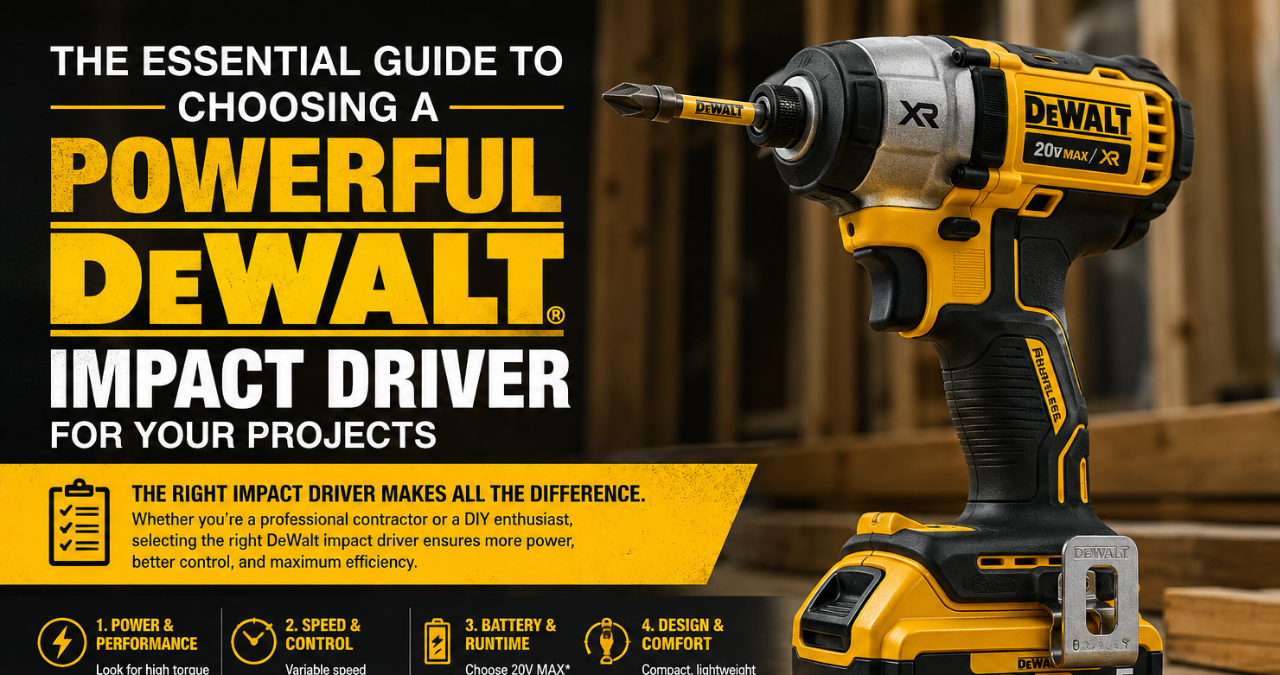
Torque is addictive. Speed is fun. A weak driver makes you angry. A DeWalt impact driver changes the game. These are not screwdrivers. They are percussion hammers in your palm. They deliver up to 205Nm of torque. That snaps rusted bolts loose. The impact mechanism hits 3,800 blows per minute. It drives a 6-inch lag screw like butter. No stripped heads. No broken wrists. You need to match the tool to the job. An 18V XR tool differs from a 12V Extreme. Battery chemistry matters here. Brushless motors matter more. This guide avoids generic praise. We demand facts. Read for hard truths.
How Much Torque Do You Truly Need For Tough Wood?
Do not guess. Guess wrong and a deck screw snaps. Hardwood is dense. Ironbark laughs at weak tools. You need over 170Nm for that. The DCF887 model gives 205Nm. It weighs only 1.6kg. It sinks a 100mm batten screw in seconds. The three-speed switch matters. Speed 1 is for finesse. Speed 2 for generic work. Speed 3 destroys wood if you lack control. Use the precision drive mode. It stops at a set torque. No overdriving. No countersink blowouts. The application matters. Framing? High torque, no finesse needed. Cabinet making? Low speed, total control. Do not buy the biggest tool for tiny screws. That is a gorilla holding a tea cup. Bit fitment is 6.35mm hex. One-hand chuck. Fast swaps. You need the right bit length. A short bit transfers more impact. A long bit flexes. It steals torque. So for tough wood, short bit, speed 3, but back off fast. Listen to the sound. The impact pitch changes when the screw seats. Your ear tells you to stop.
Brushless vs Brushed: Does The Motor Tech Really Matter?
Brushed motors are dinosaurs. They spark. They wear out. Brushless motors are digital. The tool brain talks to the magnet. It adjusts power 1,000 times a second. This gives longer runtime. Up to 57% more runtime per charge. That is a tested fact. Not marketing. Brushed motors create friction. The carbon brushes press on the commutator. Energy burns as heat. Brushless has no physical contact. The magnet spins on bearings. Silence is golden. Brushless tools scream less. They live longer. A brushed tool might die after 500 hours of hard use. A brushless one? 2,000 hours easily. The initial cost is higher. The repair cost is zero. No brushes to replace. The power delivery is smarter. When a load hits, a brushed motor bogs. A brushless motor dumps more current. It fights back. It senses resistance and ramps up. That is the difference between a stalled screw and a finished job. Always pick brushless now. The price gap is tiny. The life gap is huge.
Why Does Battery Chemistry Decide Your Work Pace?
A 1.5Ah battery is a toy. It dies fast. For impact drivers, you need 5Ah minimum. Ampere-hours tell you the fuel tank size. But chemistry tells you the power flow. Old NiCad is dead. Heavy, weak, memory effect. Lithium-Ion is standard. But look for the cell type. 21700 cells are the new king. They sit in the FlexVolt and XR Powerstack packs. They handle heat better. They dump 50% more current without voltage sag. Sag means the tool goes slow under load. A good battery holds voltage high. The impact blows stay consistent. You drive 200 screws on a 5Ah XR Powerstack. The last screw goes in as fast as the first. That is cylinder filling. No fade. A bad battery fades fast. You lean your weight on the tool. Frustration builds. Also, note the charge time. A 12A fast charger fills a 5Ah in 45 minutes. A slow charger takes 4 hours. Downtime kills momentum. Buy the kit with the fast charger. Your day loses no beats.
Stay in touch to get more updates & news on Us Daily Hub!