
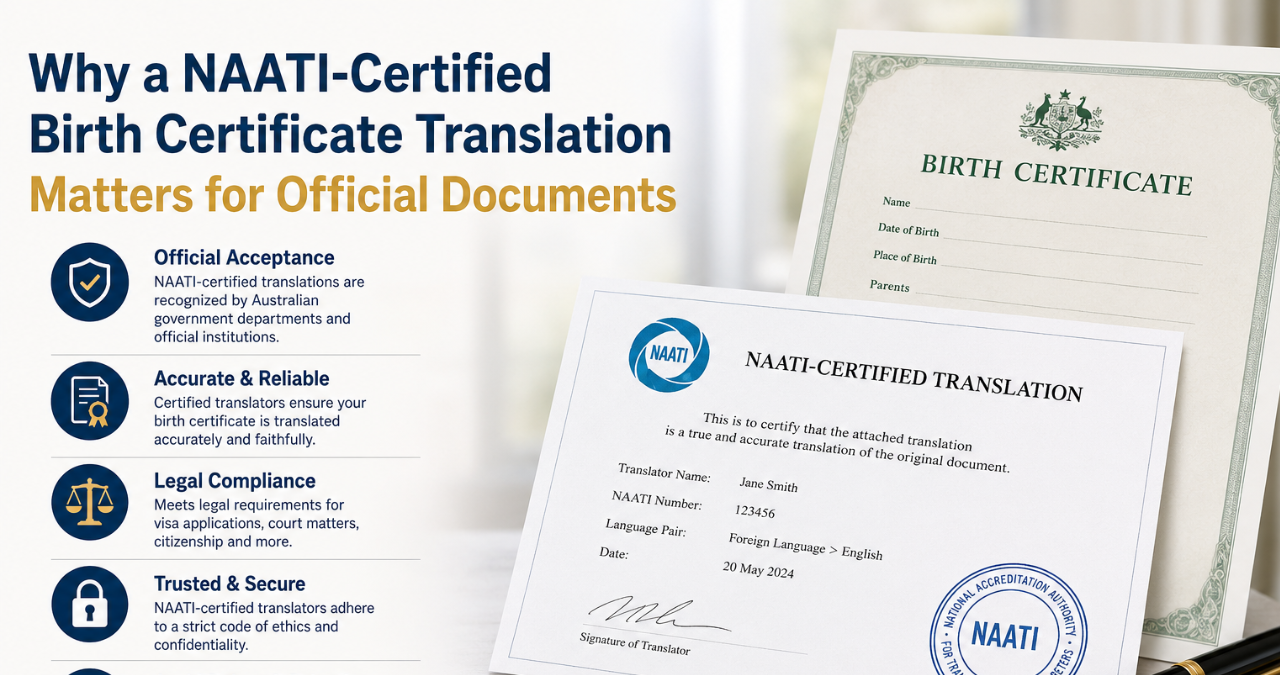
Not all translations are equal. In Australia, one standard sits above the rest. A NAATI-certified birth certificate translation is the only format accepted by Australian government bodies, courts, and immigration authorities. NAATI has been running since 1977. If your translation does not come from a NAATI-accredited professional, expect it to be rejected. This is not a technicality. It is policy. Every agency from the Department of Home Affairs to Medicare operates under this requirement. Here is what that actually means for your documents.
What Is NAATI and Why Does It Exist?
NAATI was created to build a quality standard for translation in Australia. Before it existed, anyone could call themselves a translator. Documents were inconsistent. Errors crept into legal and medical records. NAATI changed that by testing translators and certifying only those who pass rigorous exams.
Today NAATI has over 9,000 accredited practitioners covering more than 70 languages. That is broad, but not unlimited. For rare languages, wait times can stretch significantly. Plan for that.
What Does NAATI Certification Actually Guarantee?
It guarantees that the person translating your document has passed a language competency test set by an independent national authority. It does not promise perfection, but it does create accountability. If a NAATI translator makes a serious error, their accreditation gets reviewed or revoked.
That accountability matters when your visa or court case depends on word-for-word accuracy.
Which Australian Agencies Require NAATI Certification?
The Department of Home Affairs requires it for all visa and citizenship applications. The Family Court of Australia requires it for legal proceedings involving foreign documents. State and territory registry offices require it when registering overseas births, marriages, or deaths linked to Australian residents.
Even universities and private institutions increasingly require NAATI certification for foreign academic documents. It has become the default across both government and private sectors.
What Happens If You Skip the NAATI Requirement?
Your document gets rejected. Full stop. The longer story is that you lose both time and money. You pay for an uncertified translation, submit it, wait weeks for a response, receive a rejection letter, then start over from scratch.
Some visa categories have hard deadlines. A mid-process rejection can push you past that deadline entirely, forcing a full reapplication. One study by the Migration Institute of Australia found document-related issues were among the top five reasons for visa processing delays in 2022.
How Do You Verify Someone Is NAATI Certified?
The NAATI website has a public directory. Search by language, state, and accreditation type. Do this before you pay anyone. Some providers claim credentials they do not hold.
Also confirm the translator’s accreditation covers your specific language pair. A translator certified in Mandarin-English is not automatically certified in Cantonese-English. Those are different qualifications, and agencies check the details.
This verification takes five minutes. It can save you months of rework.
Stay in touch to get more updates & news on Us Daily Hub!