
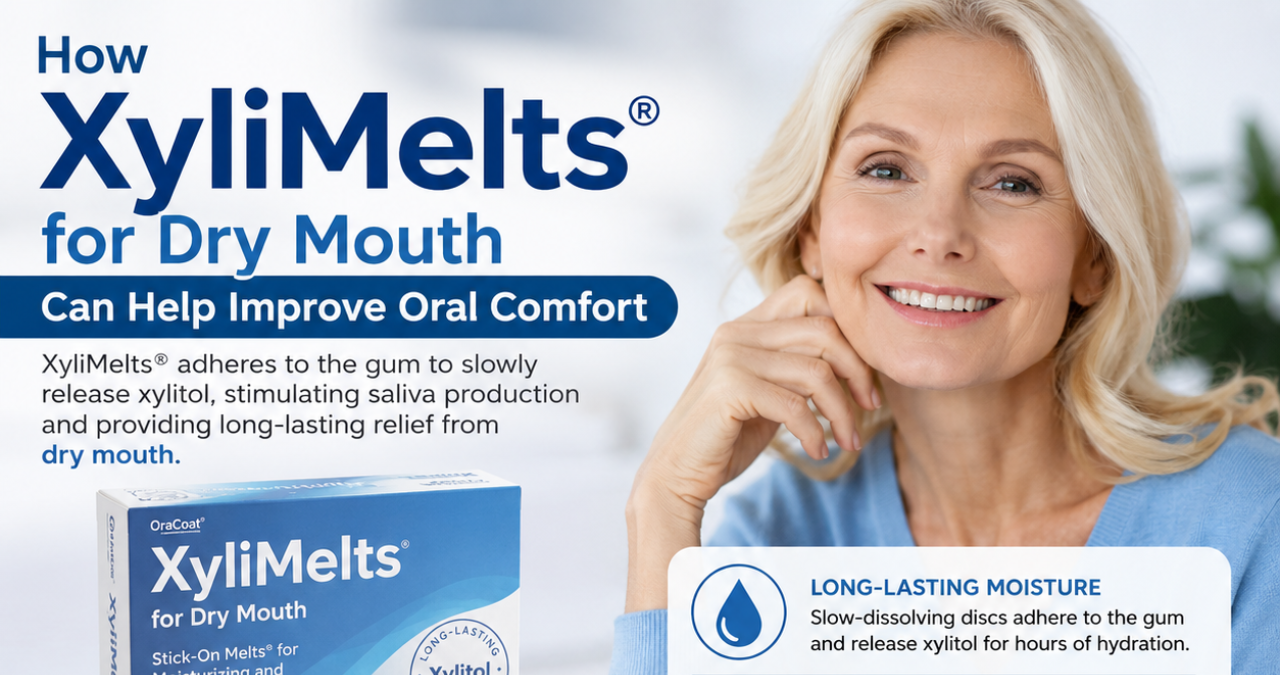
Dry mouth sounds small until it isn’t. It cracks lips, ruins sleep, and quietly wrecks teeth over time. National data shows 13.2 percent of Australian adults deal with it regularly, and that number jumps to 26.5 percent once you hit 75. XyliMelts for dry mouth offer a slow-release option that works while a person sleeps, talks, or just goes about a normal day. This article looks at why dry mouth happens, what these discs actually do, and who benefits most from keeping one in their routine.
What causes a mouth to feel dry in the first place?
Saliva does more work than most people realize. A healthy mouth produces up to 1.5 litres of it every single day. That saliva washes away food, neutralizes acid, and keeps bacteria in check.
Medications interrupt this. Over 400 common drugs list dry mouth as a side effect. Blood pressure pills, antidepressants, and antihistamines top that list. People taking four or more daily prescriptions face even higher risk.
Age plays a role too. Older adults often take more medication, and salivary glands naturally slow down. That combination explains why xerostomia hits 30 percent of people over 65 and climbs toward 40 percent past 80.
Why does dry mouth actually matter for teeth?
Saliva isn’t just comfort. It’s protection. Without enough of it, acid sits on enamel longer. Cavities form faster. Gum disease creeps in quieter than people expect.
Dry mouth also makes swallowing harder. Some people sip water constantly just to get food down. Others develop cracked lips or a burning tongue sensation that never fully goes away.
How do XyliMelts actually work?
The disc sticks to the inside of the cheek or gum. Saliva and gentle movement from the mouth slowly dissolve it over hours. As it dissolves, it releases moisture and stimulates the body’s own saliva production using xylitol.
Xylitol matters here beyond just sweetness. It resists the bacteria that cause tooth decay, unlike regular sugar which feeds those same bacteria. So the disc moisturizes and protects at the same time.
Who should consider using one regularly?
Anyone on long-term medication for blood pressure, anxiety, or allergies fits the profile. Cancer patients recovering from head and neck radiation often deal with severe, lasting dry mouth too, since radiation can permanently damage salivary glands.
Night-time sufferers benefit in a specific way. Saliva production naturally drops during sleep for everyone. People with existing xerostomia often wake up with a painfully dry mouth and throat. A disc placed before bed keeps working through the night without needing reapplication.
Does timing or placement change how well it works?
Placement against the gum near the back molars tends to work best. The disc needs contact with moisture to start dissolving properly, and that area naturally has more saliva flow even in dry mouth conditions.
Daytime use suits people who talk for a living. Teachers, call center workers, and public speakers often describe their mouths drying out mid-conversation. A disc placed before a long meeting solves that quietly, without anyone noticing it’s there.
Dry mouth won’t disappear on its own for most chronic sufferers. But comfort doesn’t have to wait for a cure. Small, consistent relief changes how a person eats, sleeps, and speaks every single day.
Stay in touch to get more updates & news on Us Daily Hub!