
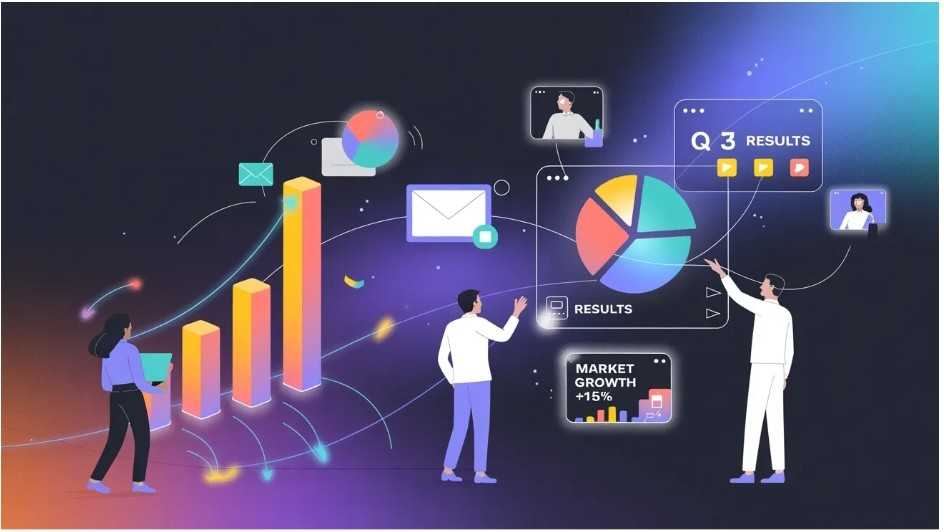
Alt text: Business messaging through animation.
A good business message can still fall flat if people do not understand it quickly.
That happens more often than brands like to admit. A product may solve a real problem. A service may save time or money. A platform may improve the way a team works. But if the audience needs too much effort to understand the value, the message loses power.
Animation helps fix that.
It takes ideas that feel heavy in text and turns them into clear visual stories. A process can unfold step by step. A product can show how it works. A service can move from problem to solution in a way that feels natural to follow.
For brands competing online, that kind of clarity is not just useful. It is necessary.
Animation Turns Explanation Into Experience
Most people do not want a long explanation before they understand the basics. They want to see what the brand does, why it matters, and how it helps them.
Animation gives them that faster.
A short animated video can show the customer’s problem first. Then it can introduce the solution and walk through the result. This works because viewers are not forced to imagine every detail on their own.
They can see the idea.
That makes animation useful for software companies, healthcare brands, finance platforms, e-commerce products, agencies, training teams, and product-based businesses.
2D Animation Keeps the Message Simple
Some ideas do not need depth or realism. They need clarity.
That is where 2D animation services work well. Clean characters, icons, shapes, and typography can explain a service or process without making the screen feel crowded.
A 2D explainer can show how a customer moves from confusion to a clear answer. It can show how a platform works. It can explain a company’s service in a way that feels simple and approachable.
This style is useful when the audience needs the main point quickly.
The best 2D videos are not overloaded with effects. They are focused, well-paced, and easy to follow.
3D Animation Adds Detail When the Product Needs It
Some products need more than simple visuals.
A medical device may need to show internal function. A machine may need to reveal moving parts. A real estate project may need to be shown before construction. A consumer product may need to be viewed from several angles before buyers understand the design.
A 3D animation studio can create visuals that show depth, movement, texture, and hidden details with full control.
This is helpful when photos or live-action video cannot explain the product clearly enough.
3D animation can slow down a process, open up a product, highlight internal systems, or place a product in a realistic environment. That makes complex ideas easier to see and easier to trust.
The Style Should Match the Message
A common mistake is choosing animation based only on what looks impressive.
That usually leads to weak communication.
The better approach is to ask what the audience needs to understand. If the goal is to explain a simple service, 2D may be enough. If the goal is to show product structure, realism, or technical details, 3D may be the stronger choice.
The style should serve the message.
A simple idea can become confusing when the visuals are too heavy. A technical product can feel underexplained when the visuals are too basic.
Good animation is not about showing off. It is about helping the viewer understand faster.
Animation Builds Buyer Confidence
Confused buyers hesitate.
They ask more questions, delay the decision, compare more options, or leave the page without taking action. That hesitation often comes from unclear messaging, not a weak offer.
Animation can reduce that friction.
A clear video can show what the product does, how the service works, and what outcome the customer can expect. It gives people enough understanding to feel more comfortable taking the next step.
This is especially helpful for unfamiliar products, technical services, high-ticket offers, and new platforms.
When people understand the value, they are more willing to trust the brand.
Animated Videos Support Sales Teams
Sales teams often repeat the same explanations in every meeting. That can become difficult when the product or service has many moving parts.
An animated video gives them a clear visual tool.
Instead of explaining everything verbally, a salesperson can show the process on screen. That keeps the message consistent and helps prospects understand the offer faster.
It also gives different decision-makers the same starting point. A manager may care about time savings. A technical buyer may care about function. A business owner may care about cost and outcome.
A good animated video gives each person enough context to continue the conversation.
Animation Works Across Multiple Marketing Channels
One strong animated video can support several parts of a campaign.
It can be used on a homepage, landing page, product page, sales deck, email campaign, social media ad, webinar, or trade show screen. Shorter clips can also be created from the main video for reels, teasers, and paid ads.
This makes animation a practical investment.
A brand can build one clear visual story and adapt it for multiple platforms instead of creating fresh content from scratch each time.
That also keeps the message consistent wherever the customer sees it.
The Best Videos Stay Focused
Trying to say too much in one video usually weakens the result.
Brands often want to include every feature, every benefit, every audience type, and every use case. That makes the video crowded and forgettable.
A stronger video focuses on one main idea.
It might explain how a product works. It might show one customer problem. It might introduce a service. It might support a launch.
Once the goal is clear, every scene should support it.
If a detail does not help the viewer understand the main point, it belongs somewhere else.
A Strong Script Matters Most
Animation starts with writing.
A polished visual style cannot save a weak script. The script should be direct, simple, and built around the viewer’s real questions.
What problem are they facing?
What does the brand offer?
How does it work?
Why should they care?
When those answers are clear, the animation has a purpose.
The visuals should not carry the whole message alone. They should support a story that already makes sense.
Conclusion
Animation helps brands explain ideas with more clarity, structure, and confidence. 2D animation works well for simple explainers, service stories, and educational content. 3D animation is better when products need depth, movement, realism, or technical detail. The strongest animated videos are not the busiest ones. They are the ones that help the audience understand the value faster and trust the message more easily.
Frequently Asked Questions
Why Do Businesses Use Animation?
Businesses use animation to explain products, services, and processes in a visual format that is easier to understand and remember.
Is 2D Animation Good for Explainer Videos?
Yes. 2D animation works well for explainers because it keeps visuals simple, clean, and focused on the main message.
When Should a Brand Use 3D Animation?
A brand should use 3D animation when it needs to show product depth, realistic movement, hidden parts, or technical details.
Can Animation Help Sales Teams?
Yes. Animation gives sales teams a clear visual tool to explain complex products or services faster and more consistently.
How Long Should an Animated Business Video Be?
Most animated business videos work best between 60 and 120 seconds, depending on the message, audience, and platform.